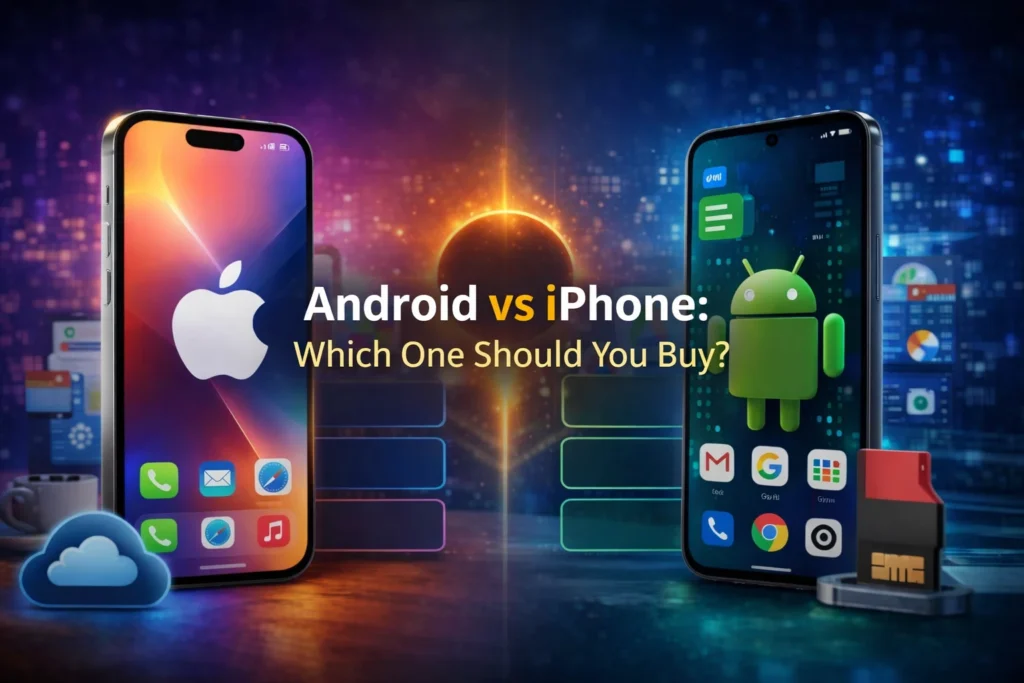
When people talk about Android vs iPhone, they’re usually comparing two different smartphone ecosystems that power most of the world’s phones.
Android, used by brands like Samsung and Google, focuses on flexibility, customization, and a wide range of device choices.
iPhone, created by Apple, emphasizes simplicity, tight security, and a smooth, consistent user experience.
The debate often comes down to personal preference: Android offers freedom and variety, while iPhone delivers seamless integration with Apple devices.
In short, Android vs iPhone isn’t about which is universally better—it’s about which style of smartphone experience fits you best.
I walk into a phone store. Two phones are in front of me. One runs Android. The other is an iPhone. Both look stunning.
Both cost a lot of money. And both can do almost everything I need.
So how do I pick the right one?
This is one of the most searched questions in the world right now.
And it makes total sense.
Your phone is the most personal piece of technology you own.
You use it the moment you wake up.
You use it the moment before you fall asleep.
Getting the wrong one feels bad every single day.
That is why I wrote this guide.
I want to make the decision simple and clear.
No confusing tech talk. No marketing nonsense.
Just honest, up-to-date answers based on the phones that are actually available in the market.
I cover everything that matters: the current phone lineup, real prices, design, camera, speed, battery, privacy, software updates, and who each phone is really for.
Every fact in this article is verified with a source you can check yourself.



The iPhone Lineup: What Apple Is Selling Right Now
Before I compare anything, you need to know what is actually available.
Apple’s current lineup in March 2026 has changed significantly from what was available just a year ago.
Apple released the iPhone 17 family in September 2025.
Then, just this week on March 2, 2026, Apple announced the newest addition to the lineup: the iPhone 17e.
This is now the most affordable new iPhone you can buy.
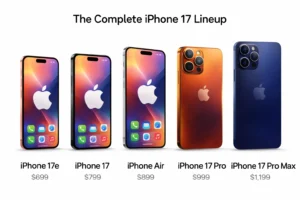
Here is the complete current iPhone lineup with verified prices:
| Model | Price (USD) | Chip | Storage |
| iPhone 17e | $599 | A19 | 256GB / 512GB |
| iPhone 17 | $799 | A19 | 128GB – 512GB |
| iPhone Air | $999 | A19 Pro | 128GB – 512GB |
| iPhone 17 Pro | $1,099 | A19 Pro | 256GB – 1TB |
| iPhone 17 Pro Max | $1,199 | A19 Pro | 256GB – 1TB |
| Samsung Galaxy S26 Ultra | $1,299 | Snapdragon 8 Elite Gen 5 | 256GB – 1TB |
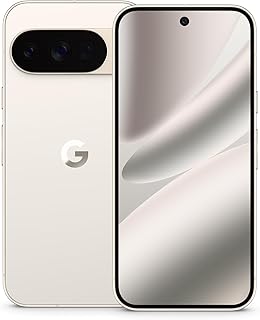
| Google Pixel 9 Pro XL | $1,099 | Tensor G4 | 128GB – 1TB |
According to Apple’s official newsroom announcement on March 2, 2026, the iPhone 17e starts at $599 for 256GB of storage.
That is a remarkable value because it includes the same A19 chip found in the full iPhone 17, MagSafe wireless charging, and a 48MP camera system.
It goes on sale on March 11, 2026.
The iPhone 17 Pro Max starts at $1,199 and is powered by the A19 Pro chip.
According to Apple’s official product page, it features a vapor chamber cooling system, 8x optical zoom, and the best battery life ever in an iPhone.
The Android Lineup: What the Competition Looks Like
On the Android side, the competition is fierce in March 2026.
Samsung just launched its new Galaxy S26 series at the Galaxy Unpacked event on February 25, 2026.
Google’s Pixel 9 series continues to be available and remains highly rated.
Samsung Galaxy S26 Series
According to Samsung’s official US product page, the Galaxy S26 Ultra starts at $1,299.99 for 256GB.
It runs the brand new Snapdragon 8 Elite Gen 5 chip, has a 200MP main camera with a wider F1.4 aperture, a 6.9-inch display, and a world-first built-in Privacy Display feature that makes the screen unreadable from the sides.
The Galaxy S26 and S26 Plus are also new, though Tom’s Guide notes that Samsung raised prices on the S26 and S26 Plus by $100 each compared to last year, while keeping the Ultra at the same $1,299 starting price.
Google Pixel 9 Series
The Google Pixel 9 Pro XL remains one of the best Android phones available.
It runs Google’s Tensor G4 chip and is known for having the best AI camera features of any phone, including Night Sight, Magic Eraser, and Photo Unblur.
The Pixel 9 Pro XL starts at $1,099.
Budget Android shoppers have excellent options too.
The Samsung Galaxy A series starts as low as $200.
The Google Pixel 8a, one of the best value phones ever made, offers near-flagship camera performance for around $499.

Android vs iPhone Market Share: Who Is Winning
According to StatCounter’s global data compiled by MobiLoud, as of early 2026, Android holds 70.36 percent of the global mobile market share while iOS holds 29.25 percent.
Together they represent over 99.6 percent of all smartphones in use worldwide.
In raw numbers, that is approximately 3.9 billion Android users compared to 1.56 billion iPhone users globally.
However, the picture is very different in the United States.
According to the same StatCounter data, iPhone leads the US market with approximately 59.8 percent share compared to Android’s 40 percent.
The US is one of Apple’s strongest markets in the world.
Why does Android dominate globally but iPhone wins in the US? The main reason is price.
Android phones start at $100 or less.
In lower-income countries across Asia, Africa, and Latin America, budget Android phones are the only realistic option for most people.
In wealthier markets like the US, UK, and Japan, premium iPhones are much more affordable to the average consumer.
| Key Market Fact
Android holds 70.36% of global smartphone market share. iPhone leads in the USA with 59.8% share. In India, Android dominates at over 95%. Source: StatCounter data via MobiLoud, early 2026. |
Design: How Do the Phones Look and Feel?
iPhone 17 Design
The iPhone 17 family made a big design change in 2025.
The iPhone 17 Pro and Pro Max now have a new aluminum unibody chassis instead of the titanium frame used in the iPhone 16 Pro.
According to Apple, this aluminum frame is 20 times better at distributing heat than titanium, which is important for the new vapor chamber cooling system inside.
The iPhone Air is Apple’s thinnest phone ever at just 6.25mm thick.
It is thinner than a pencil.
The iPhone 17 has a slightly larger 6.3-inch screen compared to the iPhone 16’s 6.1 inches.
Apple’s design philosophy has always been about consistency and polish.
Every iPhone feels premium in your hand.
The build quality is very high across the entire lineup.
Android Design
Android phones give you choices that iPhone simply cannot match.
The Samsung Galaxy S26 Ultra has a large 6.9-inch flat display with Gorilla Armor 2 glass.
The new Privacy Display is a world first — it makes the screen private when viewed from the sides, which is genuinely useful in public places.
You can also get folding Android phones. The Samsung Galaxy Z Fold series opens like a book to reveal a tablet-sized screen.
The Z Flip series folds in half to fit in a small pocket.
There is no folding iPhone available as of March 2026.
| Android
More variety — folding phones, large screens, ultra-thin designs, every shape and size imaginable. |
iPhone
Consistent, premium, and beautifully made. New aluminum unibody is lighter and better at cooling. |
| ⭐ Winner: Android for variety. iPhone for consistency and build quality. | |
Price: Which Is Better Value
This is one of the clearest differences between the two platforms.
The cheapest new iPhone you can buy today is the iPhone 17e at $599, announced just this week.
It includes the A19 chip, 256GB of storage, a 48MP camera, and MagSafe wireless charging.
That is genuinely good value for an iPhone.
The most expensive iPhone is the iPhone 17 Pro Max at $1,199.
Above that, the Samsung Galaxy S26 Ultra starts at $1,299.
On the Android side, you can buy a capable phone for as little as $150 to $200.
The Google Pixel 8a at $499 offers camera quality that rivals phones costing twice as much.
A brand new Samsung Galaxy A15 starts around $200 and handles everyday tasks easily.
There is simply no equivalent to budget Android phones in the iPhone world.
If you need a phone under $400, Android is your only real option for a new device.
| Value Tip
The Google Pixel 8a ($499) and iPhone 17e ($599) are the two best value smartphones you can buy right now. Both offer near-flagship performance at non-flagship prices. The Pixel 8a wins on camera AI. The iPhone 17e wins on ecosystem and long-term update support. |
| Android
Budget options from $150 to $1,299. More choices for every spending level. Pixel 8a is outstanding at $499. |
iPhone
Cheapest new iPhone is now $599 (17e). Great value but no option below that for a new device. |
| ⭐ Winner: Android wins on price range and value at every budget level. | |
Performance and Chips: Which Is Faster?
Both platforms use incredibly powerful chips in 2026.
The difference between them in everyday use is very small.
But the details matter.
Apple A19 and A19 Pro
According to Wikipedia’s detailed breakdown of the Apple A19, the A19 chip uses TSMC’s 3nm N3P process.
It has a 6-core CPU and a 5-core GPU.
Benchmarks show the A19 is approximately 12 percent faster in single-core performance and 18 percent faster in multi-core performance compared to the A18 in iPhone 16.
The A19 Pro in the iPhone 17 Pro and Pro Max is even more powerful.
It offers up to 40 percent better sustained performance compared to the A18 Pro, thanks to the new vapor chamber cooling system.
This means the phone stays fast even during long gaming sessions or heavy video editing.
Snapdragon 8 Elite Gen 5
The Samsung Galaxy S26 Ultra runs the Snapdragon 8 Elite Gen 5 chip.
According to Samsung’s official Galaxy S26 Ultra page, this chip has an improved NPU, GPU, and CPU compared to the previous generation.
It also supports ray tracing, which makes gaming visuals more realistic.
In everyday use, both the A19 Pro and the Snapdragon 8 Elite Gen 5 are extraordinarily fast.
Apps open instantly.
Games run smoothly at maximum settings.
You will not feel a meaningful difference between them during normal use.
Where iPhone has a proven long-term advantage is performance over time.
iPhones from 3 to 4 years ago still run the latest iOS smoothly.
This is because Apple designs both the chip and the software together, which creates a very efficient combination.
| Speed Fact
The Apple A19 in iPhone 17 shows approximately 12% better single-core and 18% better multi-core performance than the A18 in iPhone 16, according to Geekbench 6 benchmarks. Source: Wikipedia — Apple A19. |
Camera: Which Takes Better Photos?
Camera quality is the number one reason people upgrade their phone.
Here is an honest summary.
The iPhone 17 Pro now has three 48MP cameras for the first time.
The telephoto lens offers 8x optical quality zoom, up from 5x on the iPhone 16 Pro.
This is the biggest zoom leap in iPhone history and closes the gap with Samsung significantly.
The Samsung Galaxy S26 Ultra still has a 200MP main camera and a 10x periscope zoom lens.
The new F1.4 wider aperture on the S26 Ultra collects 47 percent more light than before, improving low-light photography significantly.
The Google Pixel 9 Pro XL continues to lead for AI-powered photography.
Features like Magic Eraser, Photo Unblur, and Night Sight remain best in class.
| Android
Pixel leads for AI photo tools and night shots. Samsung leads for zoom range and vivid, social-media-ready photos. |
iPhone
iPhone 17 Pro now has 8x optical zoom, three 48MP cameras, and the best video recording on any phone. |
| ⭐ Winner: iPhone for video and consistency. Pixel for night and AI. Samsung for zoom. | |
Battery Life: Which Lasts Longer?
Apple states on its official product page that the iPhone 17 Pro Max delivers the best-ever iPhone battery life, claiming up to 4 more hours per full charge compared to the iPhone 16 Pro Max.
The iPhone 17 has a rated 30 hours of video playback according to MacRumors, up from around 22 hours on the iPhone 16.
The iPhone 17e is rated at 26 hours of video playback, which is very competitive for its price range.
On the Android side, the Samsung Galaxy S26 Ultra has a 5,000 mAh battery with 60W wired charging.
The Google Pixel 9 Pro XL has a 5,060 mAh battery.
Both last a full day comfortably, with heavy users often reaching the end of the day with 20 to 30 percent remaining.
Mid-range Android phones still lead the battery life category.
A phone like the Samsung Galaxy A55 with its 5,000 mAh battery and efficient processor can last nearly two full days on a single charge.
One important note: Apple has improved charging speeds with the iPhone 17.
The standard iPhone 17 now supports 40W wired charging, up from 30W on the iPhone 16.
However, Android phones like the Samsung Galaxy S26 Ultra charge at 60W, and some OnePlus phones charge at 100W or faster.
| Android
Mid-range Android phones last up to two days. Samsung S26 Ultra and Pixel 9 Pro XL last a full day comfortably. Faster charging than iPhone. |
iPhone
iPhone 17 Pro Max has the best battery life ever in an iPhone. 40W charging on iPhone 17 is improved but still slower than top Android phones. |
| ⭐ Winner: Android wins for battery capacity. iPhone 17 Pro Max is the best iPhone battery yet. | |
Software Updates: Which Phone Lasts Longer?
This is one of the most important things to consider when buying a phone, and it is an area where the two platforms have very different track records.
Apple typically supports iPhones for 6 years with major software updates.
The iPhone 17 was released in September 2025, meaning it should receive updates until at least 2031.
According to SQ Magazine’s 2026 iPhone vs Android statistics, the average iPhone lifespan before replacement is 5.5 years, compared to 3.5 years for Android.
Android has improved enormously here.
Google now promises 7 years of software and security updates for Pixel phones. Samsung promises 7 years of updates for its Galaxy S series.
However, budget Android phones from smaller brands still commonly offer only 2 to 3 years of updates.
If you plan to keep your phone for 4 to 5 years, both flagship iPhones and flagship Android phones now offer very long support.
Budget Android phones are the weak link in this comparison.
| Update Support
iPhone 17: ~6 years of iOS updates (until ~2031). Google Pixel 9: 7 years of updates (until ~2032). Samsung Galaxy S26 Ultra: 7 years of updates (until ~2033). Budget Android phones: typically 2-3 years only. |
Privacy and Security: Which Phone Protects You Better?
Privacy has become one of the most important factors when choosing a phone.
Apple’s approach to privacy is built into every iPhone.
The App Tracking Transparency feature, introduced in iOS 14 and continued in all versions since, requires every app to ask your permission before tracking you across other apps and websites.
The vast majority of users say no. This has significantly reduced the amount of personal data flowing to advertisers.
Apple processes most of its AI features on-device, meaning your personal data stays on your phone and is never sent to Apple’s servers.
Apple Intelligence, the AI system on iPhone 17, runs its most private features locally.
Google makes most of its money from advertising.
Android does collect more data about your behaviour to show relevant ads.
However, as noted in SQ Magazine’s 2026 statistics, iOS user loyalty reached an all-time high of 94 percent in 2026, partly driven by trust in Apple’s privacy approach.
Google has added significant privacy improvements to Android in recent years.
The Privacy Sandbox initiative limits cross-app tracking.
Pixel phones process many AI features on-device as well.
But Apple’s overall privacy track record remains stronger.
For security, Apple’s closed ecosystem means fewer vulnerabilities.
All iPhones get security updates on the same day. Android updates are fragmented.
Pixel phones get them immediately. Samsung takes a few weeks.
Budget Android brands can take months.
| Android
Improved significantly. Google has added strong privacy controls. Pixel is the most private Android phone. But Google’s ad business model creates a tension with full privacy. |
iPhone
Apple does not sell your data. App Tracking Transparency limits advertisers. On-device AI processing protects your most sensitive information. |
| ⭐ Winner: iPhone wins for privacy. It is not close. | |
The Ecosystem: Do You Already Use Apple or Google Products?
One of the biggest practical factors in choosing a phone is what other devices you already own.
The Apple Ecosystem
If you have a Mac computer, an iPad, an Apple Watch, or AirPods, an iPhone connects to all of them seamlessly.
AirDrop lets you share files between Apple devices in seconds.
Handoff lets you start a task on your iPhone and continue it on your Mac.
iMessage and FaceTime work beautifully across all Apple devices.
The Apple ecosystem is one of the most polished and integrated technology experiences available anywhere.
Once you are inside it, everything works together with very little effort.
The Google Ecosystem
If you use Gmail, Google Calendar, Google Drive, Google Maps, and YouTube heavily, Android feels like home.
Everything is pre-integrated and works together without any setup required.
Google’s services are available on iPhone too, but they work most smoothly on Android.
Android also connects well with Windows computers.
You can plug an Android phone into a Windows PC and transfer files as easily as a USB drive.
Samsung’s DeX feature lets you connect your Galaxy phone to a monitor and use it as a full desktop computer.
Who Should Buy an iPhone?
- You already use a Mac, iPad, Apple Watch, or AirPods. The ecosystem benefits are real and significant.
- You want a phone that is simple, polished, and easy to use from day one.
- Privacy is very important to you and you do not want your data used for advertising.
- You take a lot of videos and want the best stabilisation and Dolby Vision quality.
- You want your phone to be fast and supported with updates for 5 to 6 years.
- You want to buy the new iPhone 17e and get a premium experience for $599.
Who Should Buy an Android?
- You want more freedom to customise how your phone looks and behaves.
- You are on a tight budget. Android gives you excellent phones from $150 to $500.
- You rely heavily on Google services like Gmail, Google Maps, and Google Photos.
- You want a phone with a very large screen, a folding design, or extreme zoom capability.
- You use a Windows computer and want seamless file transfer and Samsung DeX.
- You want the best AI photo editing tools, including Magic Eraser and Photo Unblur on Pixel.
Final Verdict: Android vs iPhone
Here is the honest truth after looking at everything.
Both Android and iPhone are genuinely excellent platforms in 2026.
There is no bad choice if you buy a phone that fits your life.
The gap in quality between the best Android phones and the best iPhones has never been smaller.
iPhone wins if you want: the best video camera, the smoothest long-term performance, the strongest privacy protection, and the easiest entry into a fully connected device ecosystem.
The new iPhone 17e at $599 is the most compelling affordable iPhone Apple has ever made.
Android wins if you want: the best price for any budget, the most camera variety, the most phone hardware choices including folding screens, and the best AI photo editing tools through Google Pixel.
Our recommendation: if you have $599 or more and you live in the Apple ecosystem, start with the iPhone 17e.
If you use Google services heavily or need a phone under $500, the Google Pixel 8a is our top pick.
If money is no concern, both the iPhone 17 Pro Max and Samsung Galaxy S26 Ultra are exceptional phones.
Frequently Asked Questions
Q: Is Android better than iPhone in 2026?
A: Neither is better for everyone. Android is better for budget buyers, Google ecosystem users, and people who want hardware variety. iPhone is better for video, privacy, long-term software support, and Apple ecosystem users.
Q: What is the cheapest new iPhone in March 2026?
A: The iPhone 17e, announced March 2, 2026. It starts at $599 for 256GB and includes the A19 chip, 48MP camera, and MagSafe wireless charging.
Q: What is the best Android phone in March 2026?
A: The Samsung Galaxy S26 Ultra is the most powerful Android phone, starting at $1,299. For value, the Google Pixel 8a at $499 offers extraordinary camera quality and long update support.
Q: Which phone is faster in 2026, Android or iPhone?
A: Both are extremely fast. Apple’s A19 Pro in the iPhone 17 Pro and Qualcomm’s Snapdragon 8 Elite Gen 5 in the Galaxy S26 Ultra are the two most powerful mobile chips available. In everyday use, neither feels faster than the other.
Q: How long will an iPhone 17 get software updates?
A: Typically around 6 years. The iPhone 17, launched September 2025, should receive major iOS updates until approximately 2031.
Q: Which Android phone gets the most software updates?
A: Google Pixel 9 and Samsung Galaxy S26 both promise 7 years of software updates as of 2026. Budget Android phones typically get only 2 to 3 years.
Q: Can I switch from Android to iPhone easily?
A: Yes. Apple’s free Move to iOS app moves your contacts, photos, messages, and many apps from Android to iPhone. It usually takes 10 to 20 minutes depending on how much data you have.
Q: Is the new Samsung Galaxy S26 Ultra worth the price?
A: At $1,299 it is one of the most expensive phones you can buy. It offers the best zoom camera, the largest and sharpest display, the fastest Android chip, and the new Privacy Display feature. If those things matter to you, yes. Otherwise, the Google Pixel 9 Pro at $999 gives you a lot of the same quality for $300 less.